© Tom Blewitt & Zack Griffiths – HMP Prisons Justice Group
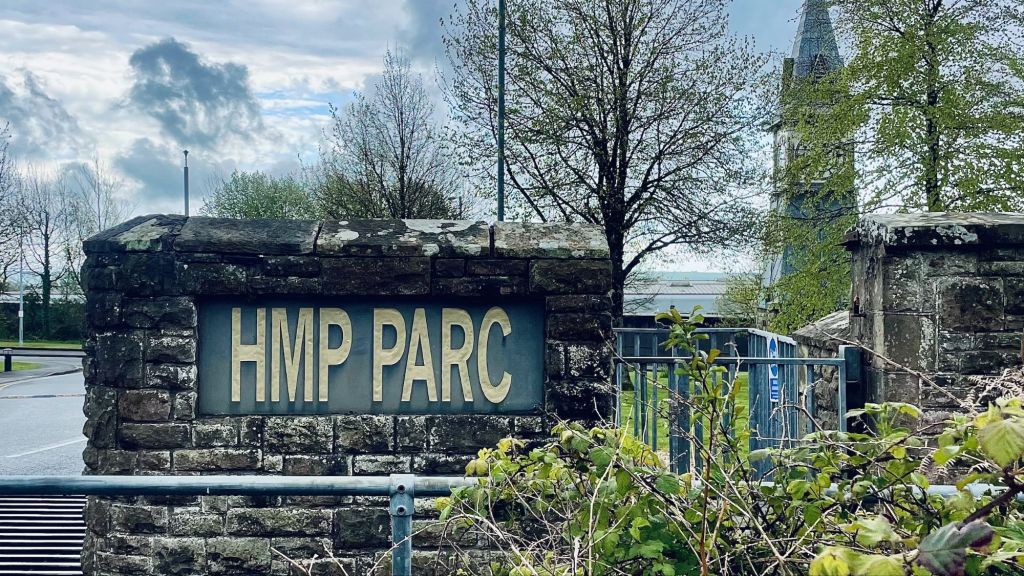
Operator allegedly disconnected urgent call before prison telephone line switched to voicemail
HMP Parc is facing serious questions after a family member attempting to report a severe safeguarding concern was allegedly cut off by the prison’s telephone operator—only to find the line diverted to voicemail when they called back moments later.
The family member contacted HMP Parc because they believed a prisoner was facing an immediate and serious risk to their safety. The call was answered, but rather than ensuring the safeguarding information was received and urgently passed to the appropriate staff, the operator disconnected the call.
When the family member called back moments later, the same operator line went directly to an answering service.
This was not a routine enquiry about visits, property or prison administration. It was an attempt to raise a severe safeguarding concern involving the welfare of a person in state custody.
At a prison already engulfed by controversy over deaths, drugs and escalating self-harm, such conduct is indefensible.
A prison operator cannot claim to take safeguarding seriously while relatives attempting to report an urgent risk are left speaking to an answering machine. Families are often the first people to recognise a sudden deterioration in a prisoner’s mental health, unusual behaviour, threats, drug debts or indications that someone intends to harm themselves.
Their warnings can save lives—but only when somebody answers, listens and acts.
A prison with no margin for complacency
This incident cannot be dismissed as an isolated customer-service failure.
Seventeen men died at HMP Parc during 2024—the highest number recorded at any prison in England and Wales that year. Of the 17 deaths in 2024, five were classified as drug-related and three as suicides.
Those figures should have produced a culture of absolute vigilance.
Instead, a family member raising a severe safeguarding alarm was allegedly disconnected and then met with voicemail.
That is not merely discourteous. In the context of HMP Parc’s recent history, it represents a potentially dangerous breakdown in the most basic function of a custodial institution: protecting the people it holds.
HM Inspectorate of Prisons said in April 2025 that Parc had suffered a “serious decline in standards.” Inspectors linked a failure to control an alarming influx of drugs to a spate of deaths and described a prison that had endured two years of turbulence and intense scrutiny.
Inspectors found that 57% of prisoners believed illicit drugs were easy to obtain. More disturbingly, 34% said they had developed a drug or alcohol problem after entering the prison.
Self-harm had increased by 58% since the previous inspection and remained at a high level.
These are not abstract statistics. They represent men in distress, grieving families and repeated warnings that the prison’s systems have failed to keep people safe.
Drugs remain readily available
Despite repeated promises of improvement, illicit substances have continued to circulate widely inside Parc.
A progress review published in February 2026 found that drugs remained “far too easily available.” Although the proportion of positive random drug tests had fallen from 31% to 24%, almost one in four tests was still positive. Inspectors also recorded another death suspected of being drug-related, although that case remained under investigation.
The prison’s drug crisis has previously been linked to synthetic cannabinoids and powerful synthetic opioids, including nitazene-related substances.
During a particularly devastating period in early 2024, six prisoners died in less than a month. Initial inquiries led the Prisons and Probation Ombudsman to believe that at least four of those deaths were drug-related.
Against this backdrop, every credible safeguarding warning should be treated as an emergency until established otherwise.
There can be no acceptable excuse for disconnecting a caller trying to raise an urgent concern. There can be no justification for allowing an emergency contact route to become unavailable immediately afterwards without an effective alternative response.
Families are not an inconvenience
HMP Parc and its operator, G4S, must explain exactly what happened.
Who answered the original call?
Why was it disconnected?
Was the operator line deliberately diverted, logged out or otherwise made unavailable?
Was the safeguarding concern recorded?
Was it passed to an orderly officer, duty governor, safer-custody team or healthcare professional?
Was the prisoner immediately located and assessed?
What auditing exists to identify calls that are terminated during safeguarding disclosures?
These questions demand answers, not corporate language about procedures, investment or lessons being learned.
The prison must also explain what families are expected to do when a potentially life-saving warning is met with a dead line or an answering machine.
Families of prisoners are not an inconvenience to be managed. They are frequently an essential source of safeguarding intelligence. They know their relatives’ voices, behaviour, vulnerabilities and warning signs. Cutting them off does not merely display contempt—it risks shutting down information that could prevent serious injury or death.
A prison holding more than a thousand people cannot operate an urgent contact system that depends on whether an individual operator feels willing or able to continue a call.
Safeguarding must not be optional, conditional or left to voicemail.
Accountability must follow
HMP Parc is run by G4S under contract to His Majesty’s Prison and Probation Service. Although G4S manages its daily operations, HMPPS retains responsibility for contract management, oversight and performance.
That means responsibility cannot be passed endlessly between the contractor and the government.
G4S must account for the behaviour of its staff and the reliability of its communication systems. HMPPS must demonstrate that it is properly scrutinising the contractor and enforcing meaningful consequences when safeguarding standards are breached.
The Ministry of Justice must establish whether this was an individual act, a staffing failure or evidence of a wider systemic problem.
Given Parc’s death toll, drug availability and 58% increase in self-harm, anything less than a transparent investigation would be an insult to prisoners and their families.
The family member in this case did what authorities repeatedly tell concerned relatives to do: report the risk.
They made the call.
They attempted to pass on the warning.
They called back after being disconnected.
It was HMP Parc that allegedly failed to remain on the line.
A prison that has experienced the highest annual death toll in England and Wales cannot afford such failures. Nor should the public be expected to accept another apology issued only after something irreversible happens.
HMP Parc, G4S and HMPPS must now provide a full explanation of the incident, preserve all relevant telephone records and recordings, identify whether safeguarding protocols were breached and publish what action will be taken.
Because when a family calls a prison fearing that somebody is in danger, answering the telephone is not a courtesy.
It may be the difference between life and death.
 HMP Prisons Justice Group