© Tom Blewitt & Zack Griffiths – HMP Prisons Justice Group
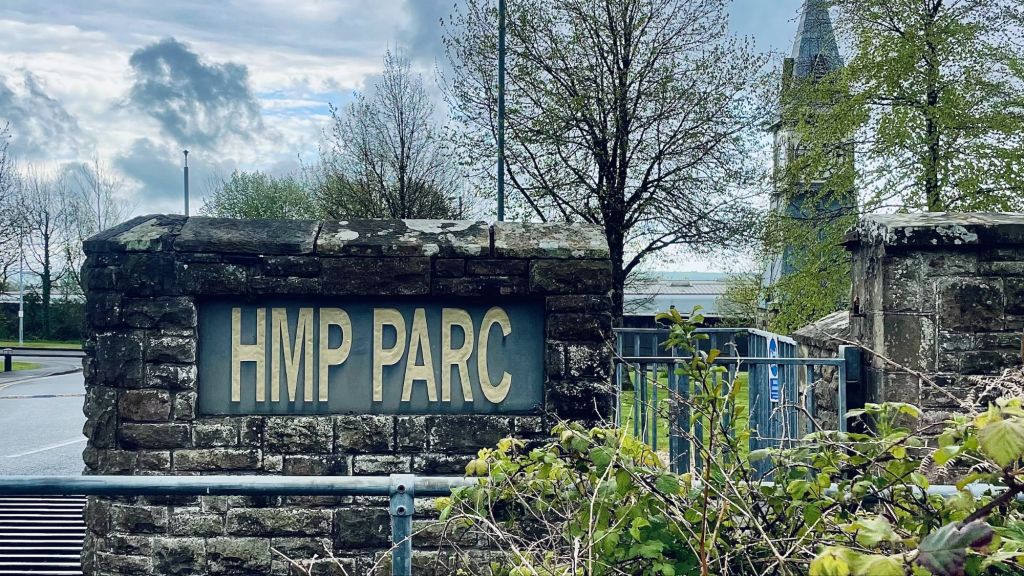
An independent investigation into the death of HMP Parc prisoner Martyn Bruce has concluded that prison and healthcare staff acted appropriately throughout his imprisonment and during the medical emergency that preceded his death, despite ongoing concerns over the availability of psychoactive substances within the prison.
The Prisons and Probation Ombudsman (PPO) found that Mr Bruce, who was serving a life sentence for murder, died on 27 July 2021 after suffering a cardiac arrest caused by the use of a psychoactive substance, commonly known as Spice. A post-mortem examination concluded that he died from hypoxic-ischaemic encephalopathy – a brain injury caused by a lack of oxygen – and pneumonia, following a sudden cardiac arrest resulting from psychoactive substance use.
The investigation examined Mr Bruce’s healthcare, his history of substance misuse, the prison’s response to repeated incidents involving drugs and the emergency response after he was found collapsed in his cell.
Long history of substance misuse
The report found Mr Bruce had a long history of offending and substance misuse before arriving at HMP Parc in September 2018.
Healthcare records showed he had reported using psychoactive substances since 2005 and had previously experienced seizures linked to their use. He also suffered from post-traumatic stress disorder (PTSD), anxiety and other mental health difficulties.
Throughout his time at Parc, staff responded to several occasions when Mr Bruce was found under the influence of psychoactive substances. In each case, healthcare staff assessed him, opened a Substance Misuse Observation Record (SMOR), monitored him until he recovered and referred him to specialist substance misuse services.
Investigators found that prison staff consistently followed local policy and provided harm reduction advice, monitoring and ongoing support designed to reduce the risks associated with continued drug use.
Healthcare judged appropriate
An independent clinical reviewer concluded that the healthcare provided to Mr Bruce was equivalent to the standard he could have expected in the community.
The review found his physical and mental health needs were appropriately managed through regular GP appointments, prescribed medication, counselling and referrals to specialist services.
In the weeks before his death, Mr Bruce had undergone a dual diagnosis assessment to address both his mental health difficulties and substance misuse. He had also been referred for further specialist intervention after traces of synthetic cannabinoids were detected during a routine drug test on 12 July 2021.
Although the clinical reviewer identified two administrative learning points for the prison’s healthcare department, investigators concluded neither had any impact on Mr Bruce’s death.
Final hours
According to the investigation, Mr Bruce appeared to be in good spirits on the morning of **20 July 2021**, speaking positively with his prison offender manager about his forthcoming transfer to open conditions.
Routine roll checks at around 7am and again shortly after midday raised no concerns.
At approximately **4.37pm**, another prisoner alerted staff after finding Mr Bruce unresponsive in his cell. Officers immediately declared a medical emergency and began cardiopulmonary resuscitation (CPR).
Two nurses arrived within minutes, attached a defibrillator and continued resuscitation until paramedics reached the scene.
Paramedics restored a pulse before transferring Mr Bruce to hospital, although he suffered further cardiac arrests during treatment. He was placed into an induced coma, but after medical staff confirmed he had suffered irreversible brain damage, the decision was taken to withdraw life support.
Mr Bruce died on **27 July 2021** with members of his family at his bedside.
The Ombudsman found no failings in the emergency response by prison officers, nursing staff or the ambulance service.
Drugs remain a challenge
While investigators concluded that staff had managed Mr Bruce’s care appropriately, the report highlighted continuing concerns over the availability of psychoactive substances inside HMP Parc.
The Ombudsman acknowledged that Mr Bruce had managed to obtain psychoactive substances on several occasions during his imprisonment. However, investigators found no evidence that prison staff had missed opportunities to intercept the drugs or identify that he was in possession of them before they were used.
The report recognised that tackling drug supply remains one of the most significant challenges facing prisons across England and Wales.
Following previous drug-related deaths, HMP Parc had introduced a comprehensive local strategy aimed at reducing the availability of drugs. Measures included enhanced intelligence gathering, body scanners, mobile phone detection technology, anti-drone initiatives and the installation of a Rapiscan machine capable of detecting drugs sprayed onto incoming mail.
Investigators noted that these measures reflected lessons learned from earlier deaths linked to psychoactive substances.
Intelligence passed to police
Following Mr Bruce’s death, prison intelligence suggested that other prisoners may have used him as a “tester” for psychoactive substances before wider distribution within the prison.
The Ombudsman confirmed that HMP Parc shared the intelligence with the South Wales Police Crime in Prison Team for further investigation.
The report made clear that any criminal investigation fell outside the Ombudsman’s remit.
Drug-related death confirmed
Post-mortem toxicology found traces of synthetic cannabinoids in Mr Bruce’s system when he died.
Medical experts concluded that the psychoactive substance triggered the cardiac arrest that ultimately caused his death.
The investigation also noted that an inquest, concluded on **29 June 2023**, formally determined that Mr Bruce’s death was drug-related.
Overall findings
The Ombudsman concluded that prison and healthcare staff had consistently managed Mr Bruce’s substance misuse in line with established procedures and had provided appropriate medical care throughout his sentence.
Investigators found that staff responded appropriately whenever he was identified as being under the influence of drugs, offered repeated opportunities for treatment and support, and acted swiftly during the medical emergency that led to his death.
While expressing concern about the continuing availability of psychoactive substances within prisons, the report found no evidence that failings by staff contributed to Mr Bruce’s death.
As a result, the Ombudsman made **no recommendations** regarding the prison’s management of Mr Bruce’s substance misuse, concluding that the risk management systems and support arrangements introduced at HMP Parc had been used appropriately throughout his imprisonment.

