© Tom Blewitt & Zack Griffiths – HMP Prisons Justice Group
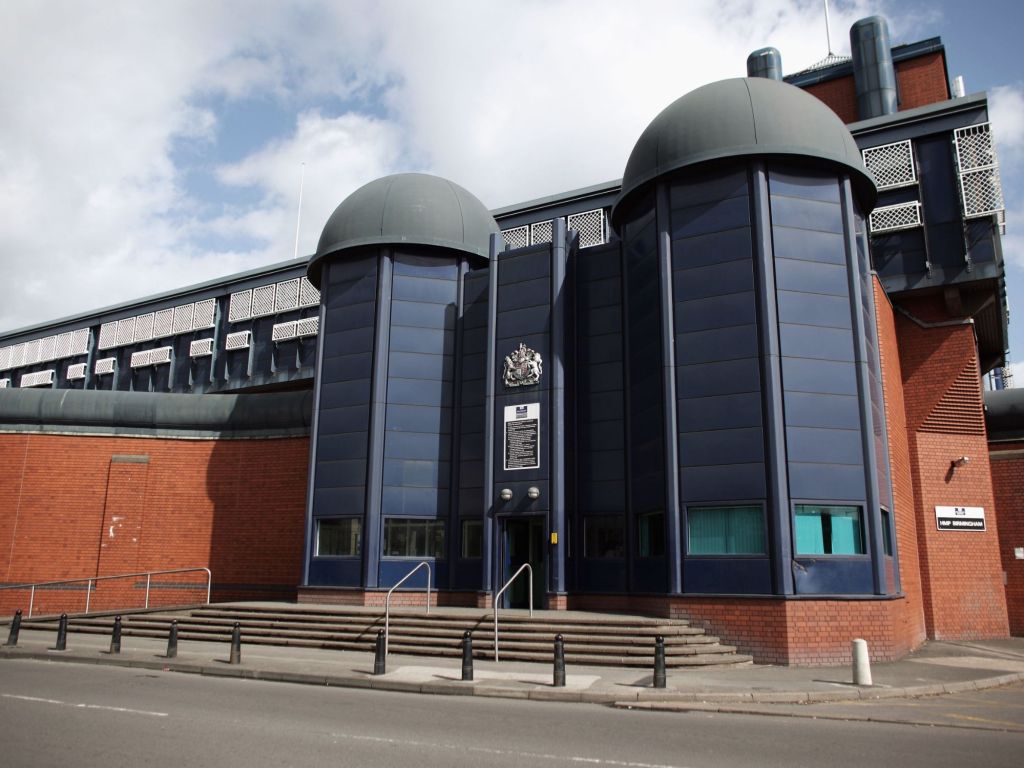
A prison officer at HMP Birmingham was forced to cut down two prisoners in a short space of time.
Two separate incidents. Two separate cells. Two separate attempts to save men found hanging behind locked doors.
This is not an emotive exaggeration. It is the lived reality inside one of the West Midlands’ largest prisons — and it comes during a year in which the prison’s death rate has reached its highest level since the private contractor G4S lost control of the jail.
The question is not whether something is wrong.
The question is how many more warnings are needed.
A Prison Under Pressure
HMP Birmingham has long struggled with overcrowding, violence, and drug use. Built to hold far fewer men than it often houses, the prison has repeatedly faced criticism for unsafe conditions and inconsistent care.
After a series of damning inspections, the Ministry of Justice stripped G4S of its contract and returned the prison to public control. The takeover was meant to stabilise standards and restore safety.
But in 2025, the number of deaths inside the prison has climbed to its highest point since that transition.
Self-inflicted deaths remain a central concern across the prison estate, and Birmingham has not been immune.
Crisis Behind the Cell Door
When a prisoner is found hanging, response time is everything.
Officers unlock. They cut ligatures. They call healthcare. They begin CPR.
In Birmingham, one officer had to do this twice within a short timeframe.
These incidents raise serious questions about suicide prevention measures inside the jail. Prisoners identified as being at risk of self-harm should be managed under the ACCT process — Assessment, Care in Custody and Teamwork — a system designed to monitor, review and support vulnerable individuals.
But the existence of a policy does not guarantee effective protection.
The reality is that mental health teams inside prisons are stretched. Transfers to secure psychiatric hospitals can take weeks or months. Men experiencing acute psychosis, severe depression, or drug-related mental health crises are often managed within ordinary wings rather than clinical environments.
In practice, prison officers frequently become first responders to psychiatric emergencies.
“Parity of Care” — A Legal Standard Not Being Met
Under NHS commissioning arrangements, prisoners are meant to receive healthcare equivalent to that available in the community.
That includes mental health services.
In the community, a person presenting with suicidal intent or acute psychiatric symptoms could be assessed urgently, detained under mental health legislation if necessary, and admitted to a secure hospital bed.
Inside prison, delays are common. Staffing shortages, security procedures, and limited bed availability mean that some prisoners remain in standard cells while awaiting specialist intervention.
The principle of parity of care is clear in policy.
The implementation is far less certain.
Deaths Rising in 2025
The number of deaths at HMP Birmingham in 2025 has reached its highest level in years — the highest since the fallout that led to the removal of G4S from the contract.
Each death triggers an investigation. Each produces findings. Each highlights missed opportunities, communication breakdowns, or failures to recognise escalating risk.
Yet the pattern persists.
Nationally, self-harm incidents in prisons have increased in recent years. Overcrowding has worsened. The prison population remains near capacity. Staff recruitment struggles to keep pace with demand.
Birmingham reflects those national pressures — but the concentration of deaths in one year places it under particular scrutiny.
The Human Cost
Behind every statistic is a sequence of preventable moments:
* A mental health referral delayed.
* An observation not completed thoroughly.
* A prisoner detoxing from drugs without sufficient clinical oversight.
* A transfer to hospital that did not happen quickly enough.
And then, a door unlocked in emergency.
When officers are repeatedly cutting men down, it indicates that intervention is happening at the very last stage — when prevention has already failed.
After Private Control — But Problems Remain
The removal of G4S was meant to mark a turning point. Inspectors had previously described unacceptable conditions and serious safety failings.
Public control was presented as the solution.
But rising deaths in 2025 demonstrate that structural problems run deeper than management labels. Overcrowding, insufficient mental health provision, drug prevalence, and delayed hospital transfers are systemic issues across the estate.
Changing the badge on the gate does not automatically fix what is happening behind it.
A System at Breaking Point
HMP Birmingham’s recent incidents are not isolated tragedies. They are indicators.
Indicators that suicide prevention measures are under strain.
Indicators that mental health provision inside custody does not match the complexity of need.
Indicators that the legal promise of equivalent healthcare remains uneven in practice.
Two men cut down in a matter of weeks is not routine.
It is a warning.
And unless staffing levels, clinical capacity, and hospital transfer delays are addressed urgently, the death toll in 2025 may not be remembered as an anomaly — but as a turning point that came too late.
 HMP Prisons Justice Group