© Zack Griffiths
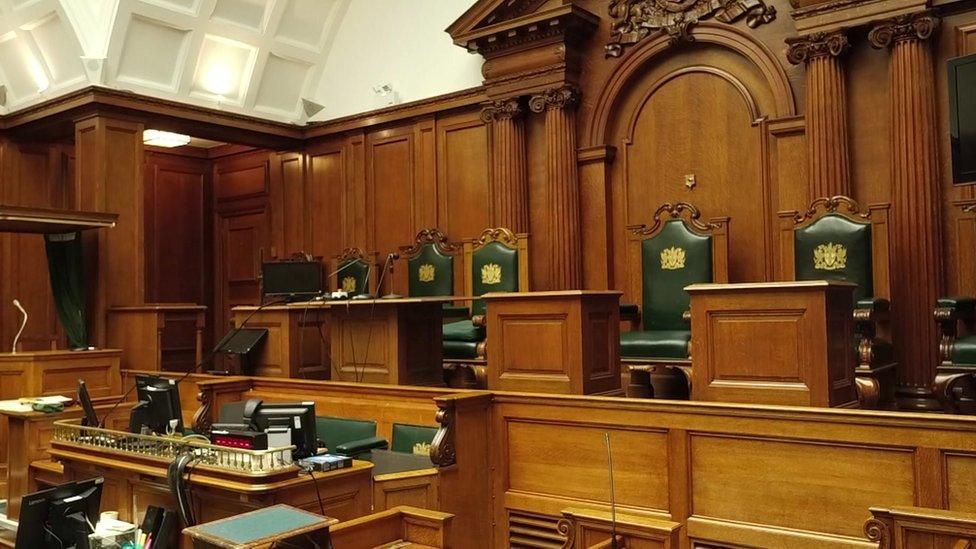
The UK government is once again pushing proposals that would allow juryless trials in certain criminal cases. Sold to the public as a pragmatic response to the growing court backlog, the policy would expand the circumstances in which a defendant can be tried by a judge alone, rather than by a jury of their peers.
Ministers argue that removing juries from some trials would speed up justice, reduce delays, and ease pressure on the criminal courts. The language is managerial and technocratic: efficiency, throughput, modernisation. But behind these buzzwords lies a fundamental shift in how justice is delivered in Britain—one that weakens centuries-old protections for ordinary people.
What makes this proposal especially galling is who is backing it. David Lammy has previously been a vocal defender of the jury system. In earlier years, Lammy spoke clearly about the importance of juries as a safeguard against state overreach and institutional bias, particularly for minorities and the working class.
‘Criminal trials without juries are a bad idea’. Lammy 2020.
He understood that juries are not an inconvenience to justice but a cornerstone of it—an essential check on power that ensures the public remains directly involved in the administration of the law. For someone with that history to now tolerate or support juryless trials represents a stark reversal of principle.
The same charge applies to Keir Starmer. Before entering frontline politics, Starmer built his reputation as a lawyer and former Director of Public Prosecutions. He repeatedly emphasised the value of juries, arguing that they enhance public confidence in verdicts and protect the legitimacy of the justice system.
In 1992, Keir Starmer said: “The right to trial by jury is an important factor in the delicate balance between the power of the state and the freedom of the individual. The further it is restricted, the greater the imbalance.”
Starmer once recognised that justice must not only be done, but be seen to be done. Removing juries undermines that principle entirely. When politicians who once championed jury trials now remain silent—or worse, supportive—of their erosion, accusations of hypocrisy are not just fair, they are unavoidable.
The problem is not merely a policy disagreement; it is a betrayal of stated values. Politicians who previously warned about authoritarianism, discrimination, and miscarriages of justice now endorse a system that concentrates power in fewer hands.
You cannot claim to support civil liberties while dismantling one of their strongest protections. You cannot praise democratic accountability while removing the public from the courtroom. On this issue, the gap between rhetoric and reality is impossible to ignore.
Juries have been around since Henry II in the 12th century in 1152
Juryless trials strike at the heart of Britain’s constitutional heritage. Clause 39 of Magna Carta states:
“No free man shall be seized or imprisoned, or stripped of his rights or possessions, or outlawed or exiled, or deprived of his standing in any other way, nor will we proceed with force against him, except by the lawful judgment of his peers and by the law of the land.”*l
That principle—judgment by one’s peers—is not symbolic. It is foundational. While the legal system has evolved since 1215, the moral force of this clause remains central to British justice. Juryless trials hollow out that promise, replacing communal judgment with state authority alone.
Court Backlogs Are Not Caused by Juries
The government’s justification collapses under scrutiny. Court backlogs are not caused by juries. Across the country, courtrooms sit empty every single day—not because jurors are unavailable, but because of chronic underfunding.
There are too few judges, too few clerks, too few prosecutors, and too few defence solicitors. Cases are delayed because the system has been starved of resources for over a decade. Removing juries does nothing to address these structural failures; it simply scapegoats a vital democratic institution.
A jury is harder to corrupt than a single judge. That is not an insult to the judiciary; it is a recognition of human nature and power dynamics. Twelve ordinary citizens, drawn from different backgrounds, must be persuaded collectively. Their diversity of experience acts as a shield against bias, pressure, and political influence.
A lone judge, however principled, is far more vulnerable—to institutional culture, to career incentives, and to subtle or overt pressure from the state. History shows that miscarriages of justice flourish where power is concentrated and scrutiny is reduced.
Without a jury, defendants lose not just a procedural right, but a vital layer of protection.
Ultimately, juryless trials are not about efficiency—they are about control. They make convictions easier, reduce uncertainty for the state, and weaken the role of the public in holding authority to account.
Once normalised, such measures rarely remain limited. What begins as an “exception” soon becomes routine. Rights, once lost, are rarely fully restored.
Justice is not a production line. It should not be “streamlined” at the expense of fairness, transparency, and liberty. Jury trials are slower precisely because they are careful. They are messy because democracy is messy.
A system that abandons juries abandons the people. And when politicians who once knew better now push that system forward, the charge of hypocrisy is not rhetoric—it is reality.
 HMP Prisons Justice Group