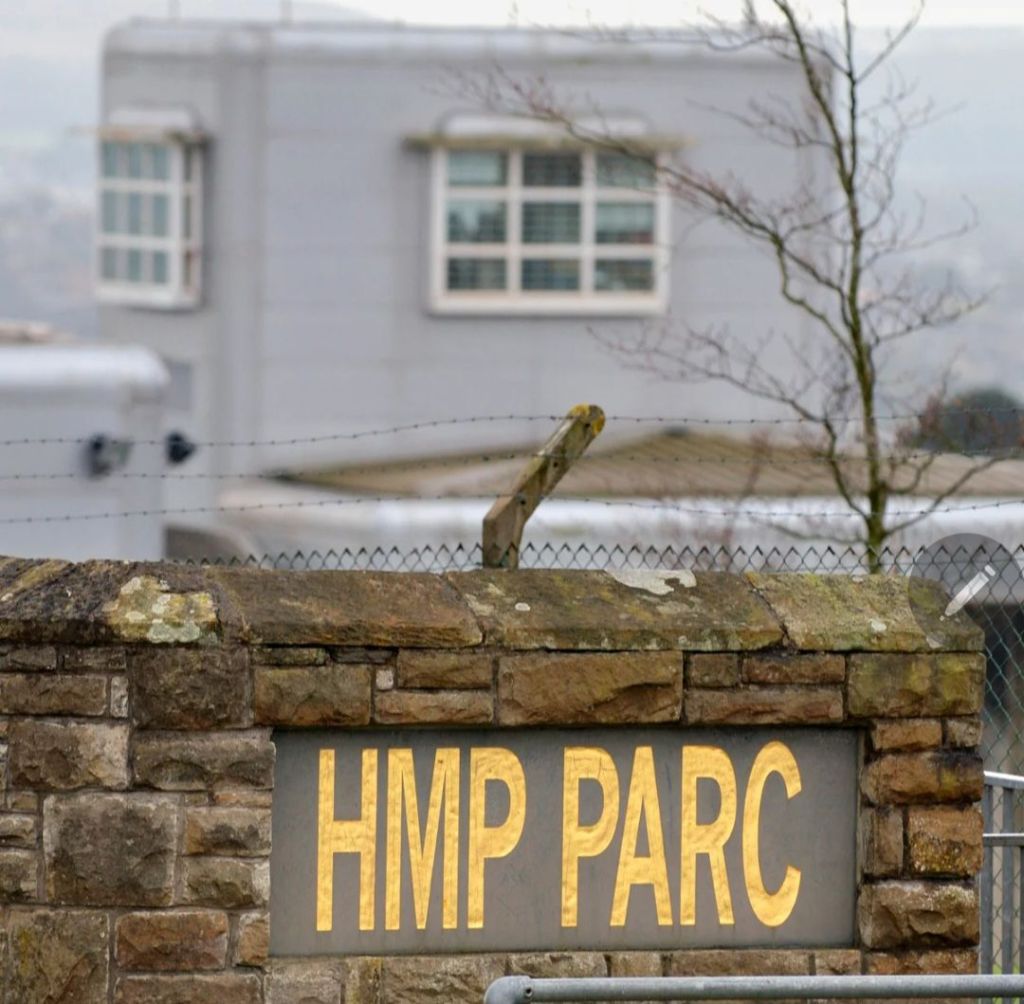
On 1 November 2025 at hmp parc, grief turned to fury inside G4S-run HMP Parc, as protesters mourned 38 lives lost inside and accused South Wales Police of protecting corporate impunity.
SHOCKING SCENES AT HMP PARC
The gates of HMP Parc trembled under the weight of frustration, grief, and defiance on Saturday, 1 November.
Protesters gathered outside the privately run prison to mourn the 38 men who have lost their lives behind its walls since 2025.
The demonstration began as a solemn planned event — pieceful with powerful placards reading “Justice for the 38” and “No More Deaths in Parc.” But when G4S security guards began pushing protests those quiet voices erupted into a roar finally resulting in 2 allegations of assault being made by the organisers of the planned event.
“We came to remember the dead — not to be beaten by those responsible for their deaths,” said the lead organiser, who was assaulted alongside another protester. “G4S think they can silence us, and the police are helping them. But we will not back down.”
“We were peaceful. We were organised. We were there for the families,” said one demonstrator. “The guards came out like we were a threat — when the real threat is what’s happening inside those walls.”
Witnesses at the scheme say the South Wales Police officers present refused to take statements after the assault. For the protesters, that moment confirmed what they had long suspected — that the police are shielding a corporate contractor rather than protecting citizens.
A Crisis Hidden Behind Bars
The tragedy at Parc is not an isolated case; it reflects a national crisis in prison safety across England and Wales.
- 399 people died in prison custody in the 12 months to March 2025 — a 37 per cent increase from the previous year.
- 91 deaths were self-inflicted.
- Self-harm incidents reached 910 per 1,000 prisoners, the highest rate on record.
- Assaults climbed to 356 per 1,000 prisoners, marking another disturbing peak.
(Source: UK Ministry of Justice, Safety in Custody Statistics, 2025.)
Experts say these figures reveal a system at breaking point — overcrowded, understaffed, and overwhelmed. Many prisons operate at well over capacity, with chronic shortages of trained officers and healthcare professionals. The result: despair, drugs, violence, and neglect.
HMP Parc: A Case Study in Corporate Failure
Run by the multinational security company G4S, HMP Parc has long faced scrutiny for its shocking record. In 2024 alone, the prison recorded 17 deaths — the highest number of any British jail in 2024, with 38 deaths since 2022, indeed the highest death record ever recorded across any prison in England and Wales.
Independent inspections and media investigations have painted a picture of a facility spiralling into chaos:
- Drug finds nearly doubled in one year, with 70 per cent of prisoners saying drugs were easy to obtain.
- Violence and self-harm rates were described as “out of control.”
- Families of deceased inmates say they were kept in the dark and denied answers.
Despite these conditions, G4S continues to profit from its government contract — a deal many campaigners now call “morally indefensible.”
The Protest Turned Toxic!
As chants of “No justice, no peace!” filled the air, police advanced toward protesters gathered near the bottom area, with hostile aggression and provocative language.
“We were peaceful. We were organised. We were there for the families,” said one demonstrator. “The guards came out like we were a threat — when the real threat is what’s happening inside those walls.”
When the police declined to take statements, protesters accused them of complicity. Many see the South Wales Police’s actions — or lack of them — as part of a broader pattern of institutional protection for G4S.
Policing and Power
This is not the first time questions have been raised about South Wales Police’s relationship with G4S. The company has long provided private security and prisoner transport services in the region, blurring the lines between corporate and state responsibility.
Campaigners argue that this interdependence breeds impunity — when a private contractor is both the subject of police scrutiny and a business partner in law-enforcement logistics.
“How can the police investigate the hand that feeds them?” the organiser asked. “It’s a conflict of interest, plain and simple.”
Deaths That Demand Answers
According to the charity INQUEST, the rate of deaths in custody remains “unacceptably high.” Many of those recorded as “natural causes,” the charity notes, involve failures in healthcare, mental-health treatment, or supervision.
Data show that male prisoners are nearly four times more likely to die by suicide than men in the general population.
When deaths occur so frequently — and in one facility in such concentration — the question becomes not if something is wrong, but how deep the failure goes.
The Price of Privatisation
At the heart of the Parc crisis lies a model of privatised incarceration that critics say is fatally flawed.
Under private management, cost-cutting becomes the central priority. Staffing levels drop. Training budgets shrink. The incentive to rehabilitate fades.
Even as conditions worsen, G4S has continued to receive public funds, often protected by layers of bureaucracy and vague performance metrics.
Families of the deceased have called for the termination of the company’s prison contracts nationwide, arguing that accountability should never be outsourced.
The Campaign Continues
Saturday’s protest was only the beginning. Organisers have now announced a follow-up demonstration at South Wales Police Headquarters, demanding that the force accept their statements and open a formal investigation into the assaults at Parc.
Their wider demands include:
- An independent public inquiry into the 38 deaths at HMP Parc.
- Suspension of G4S
- Transparent publication of all causes of the deaths in-custody.
- Police accountability for their refusal to act.
- A national review of private prison operations and their oversight.
Each demand is rooted in one conviction: justice cannot exist where profit outweighs human life.
Why It Matters
The scandal at Parc is not confined to Bridgend. It is part of a national moral reckoning. The prison system, designed to protect society, is consuming lives instead.
To ignore these deaths is to accept that some lives matter less — that incarceration suspends not just liberty but humanity.
When protesters are beaten and ignored, it signals that the rot has spread beyond the walls; the disease of indifference has reached those sworn to uphold the law.
A Closing Statement
This article is not just an account of one day’s protest. It is a warning — and a call.
To the authorities: the world is watching.
To the families: your grief is heard.
To G4S and South Wales Police: accountability will come.
The people who gathered outside HMP Parc on 1 November are not done. They will march again, this time to the doors of South Wales Police Headquarters, demanding justice not only for the 38 lost lives but for everyone silenced by a system that protects power over people.
“We stand for the living. We remember the lost. We fight for justice,” said the organiser. “And we will not back down.”
AN OFFICAL LIST VERIFIED BY HMP PRISONS’ JUSTICE GROUP ( BELOW )
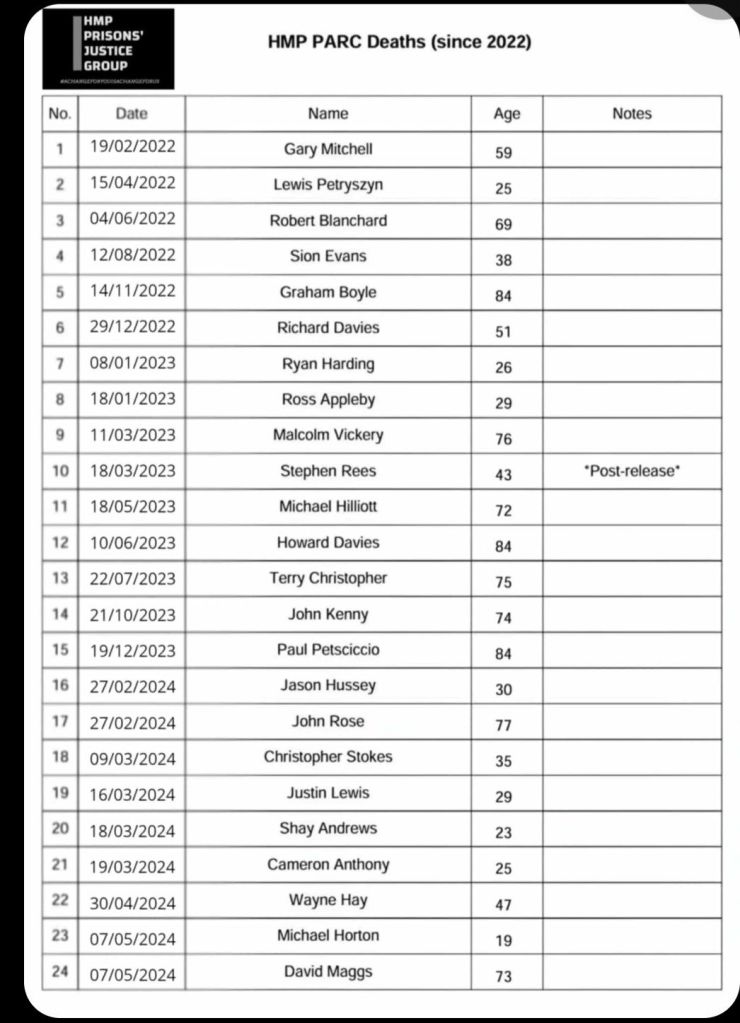
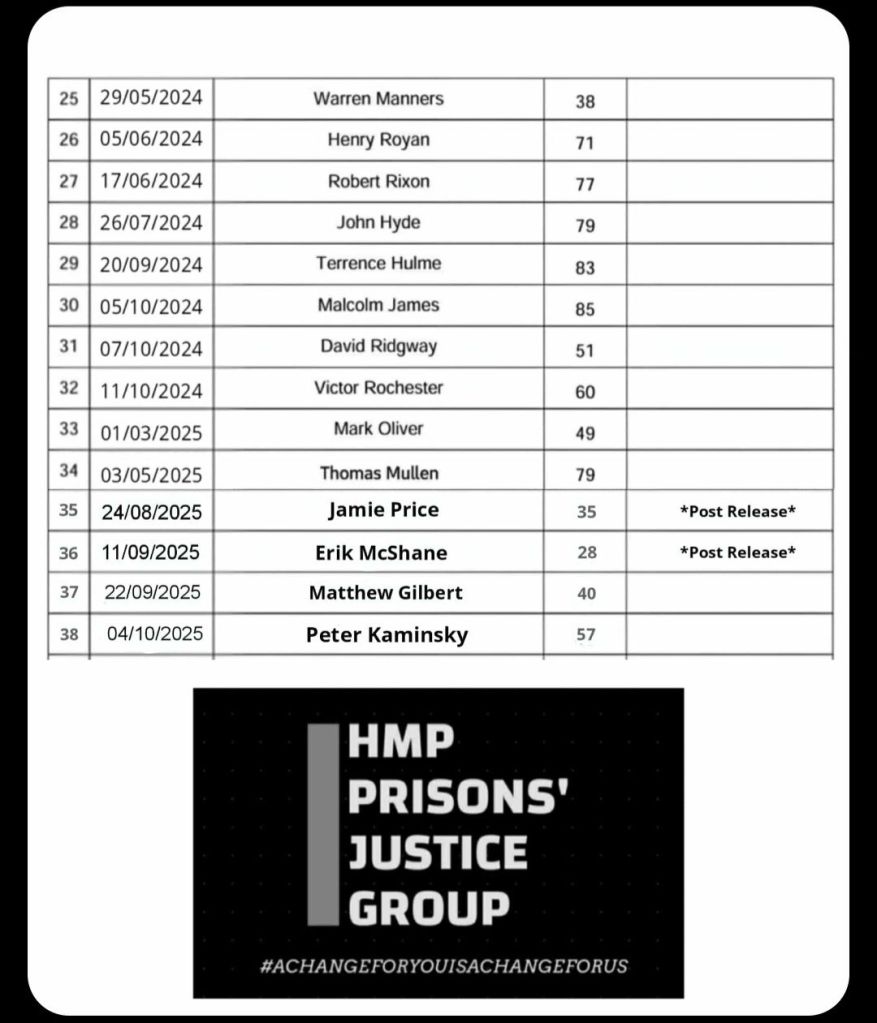
As the crisis continues the family’s will ensure that accountability and hope remains locked into their battle for justice.
SPEAKING LIVE AT THE EVENT ZACK GRIFFITHS
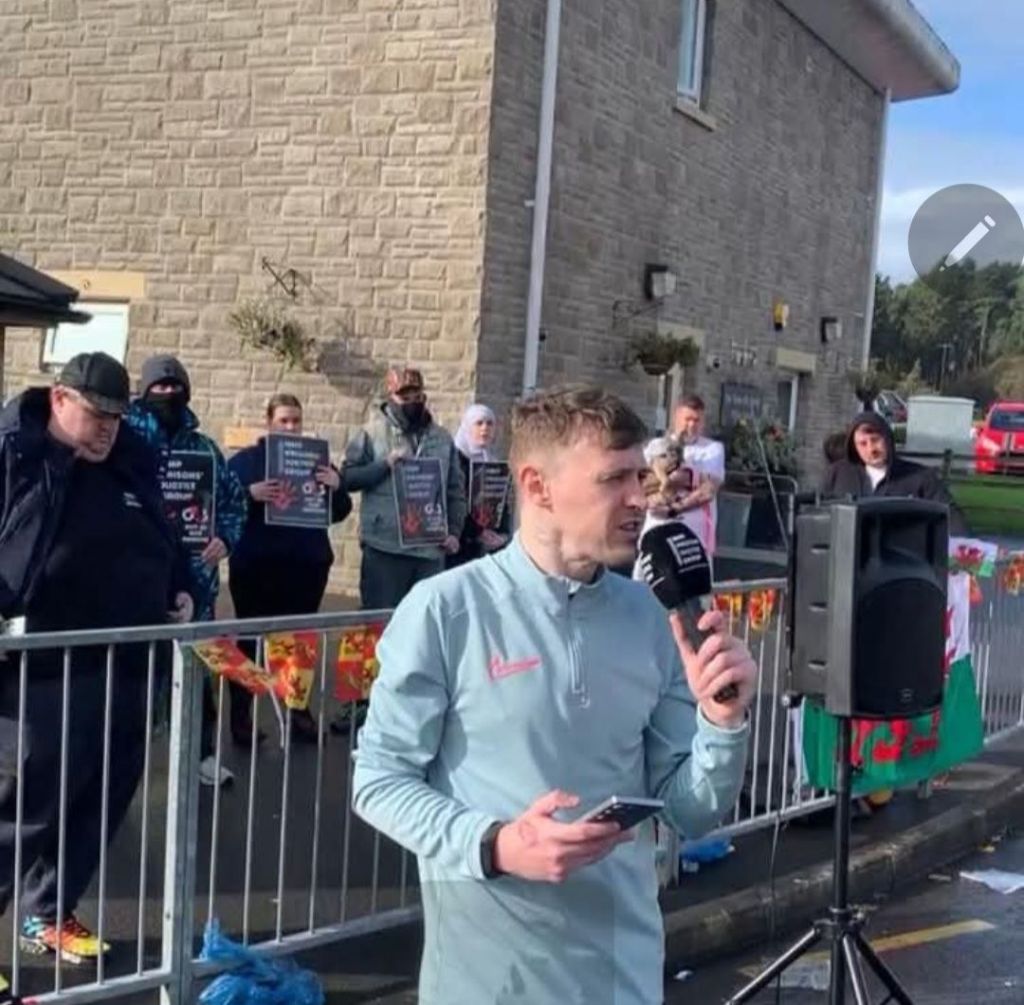
Saturday 1st November
© Zack Griffiths & Tom Blewitt- HMP Prisons Justice Group
 HMP Prisons Justice Group